 Climate Education
 Climate Consulting
 Nature Carbon Projects
 Energy Carbon Projects
 Carbon Trade
Published on February 03, 2025
———————————————————————————————————————-
Forest restoration is at the heart of nature-based climate solutions. In a global scenario where carbon removal becomes indispensable for countries and companies to meet net-zero emissions targets, restoration projects gain strategic importance — not only because they remove CO₂ from the atmosphere, but because they regenerate landscapes, protect water sources, and strengthen local economies.
Among all the natural solutions available, native restoration is one of the ones that delivers the broadest benefits, combining climate, environmental and social impact.
Why does restoration matter so much for the climate?
1. Remove carbon from the atmosphere
Depending on the restoration strategy (type of planting, density, climate, soil, management), restored areas can sequester several tons of CO₂ per hectare per year or per succession cycle — studies point to variations of ~3 to 40 tCO₂/ha/year in the first years.
Trees remove CO2 from the atmosphere to grow, and restored areas can sequester several tons of CO2 per hectare – studies point to variations from 3 to 40 tCO2/ha/year, depending on the restoration strategy (type of plantation, species, density, climate, soil, biome, etc.).
2. They regenerate degraded ecosystems
Restoration returns essential ecological functions, such as:
- protection of soil and springs,
- natural water filtration,
- restoration of ecological corridors,
- increase in biodiversity.
3. They create economic and social opportunities
Well-structured projects stimulate:
- nurseries and seedling production,
- technical training,
- local income generation,
- strengthening of the socio-bioeconomy.
4. Contribute to global and national goals
Brazil has made significant commitments to restoration and conservation in:
- Brazilian NDC, which plans to expand large-scale restoration;
- UN Decade of Restoration (2021–2030);
- National Plan for the Recovery of Native Vegetation (PLANAVEG).
In other words: creating, structuring and financing large-scale restoration is not only desirable — it is urgent.
Why does Brazil have a unique opportunity?
Brazil has three rare conditions:
✔ Biodiversity and climate favorable
✔ vast degraded areas with potential for recovery
✔ qualified scientific and socio-environmental institutions
Biomes such as the Atlantic Forest, the Amazon and the Cerrado have thousands of hectares that could generate carbon removal through restoration. The country can become a world reference in the integration between:
- ecological science,
- robust governance,
- climate finance instruments;
- and scalable carbon projects.
But for this, it is essential that new financial, technical and partnership models are structured.
The case of the Cantareira System: a living laboratory of restoration and climate
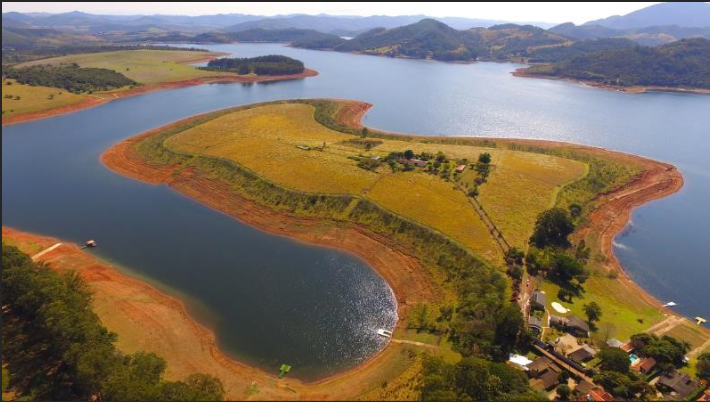
The Cantareira System, one of the most important water supply systems in Brazil, is also one of the most strategic regions for carbon capture, mitigating climate risks and ensuring water security and regeneration of the Atlantic Forest.
Restoration projects in this region not only remove CO₂, but also increase water infiltration and aquifer recharge, reduce erosion and siltation, protect crucial water sources for millions of people, and strengthen sustainable production chains in the surrounding area. With the advance of the impacts of the climate crisis, the restoration and maintenance of water source areas is essential to ensure the supply of cities.
It is a clear example of how natural solutions are both climatic and water-based.
What challenges need to be faced?
Despite the enormous potential, large-scale restoration projects still face challenges in Brazil, such as complex financial structuring and high initial costs, which make projects depend on large foreign investments, and carbon credits are an opportunity to leverage these initiatives. In addition, the restored areas require long-term monitoring to ensure the permanence of the removed carbon. Local technical and logistical training are also essential to ensure the financial and social sustainability of the projects.
This entire chain depends, then, on attracting impact investors.
Innovative financing models — such as blended finance, impact funds, and public-private partnerships — are key to unlocking this agenda.
Cooperation agreements as a key to scale: the example of Future Climate + IPÊ
Within this context, cooperation initiatives between technical, scientific and financial organizations are essential to transform pilot projects into structured restoration programs.
A recent example is the agreement signed between Future Climate and IPÊ – Institute for Ecological Research, announced during COP30.
The objective of the partnership is to unite science, territorial implementation capacity, and climate financial mechanisms to enable large-scale restoration projects in the Cantareira System.
The agreement includes actions such as:
- vocational training and education for young people in bioeconomy;
- strengthening of nurseries, cooperatives and sustainable production chains;
- support for LIS – IPÊ’s Innovation and Sustainability Laboratory;
- financial structuring and development of restoration carbon projects.
This partnership illustrates how models of cooperation can accelerate restoration in Brazil — integrating scientific knowledge and climate finance to generate high-integrity climate, environmental, and social impact.
Restoration is climate, water, biodiversity and development
Restoration projects are one of the most powerful tools to tackle the climate crisis. But to scale, they need to be connected to:
- sound science,
- qualified governance,
- community participation,
- and viable financial models.
And it is exactly at this point that partnerships such as Future Climate + IPÊ show possible paths.
References